
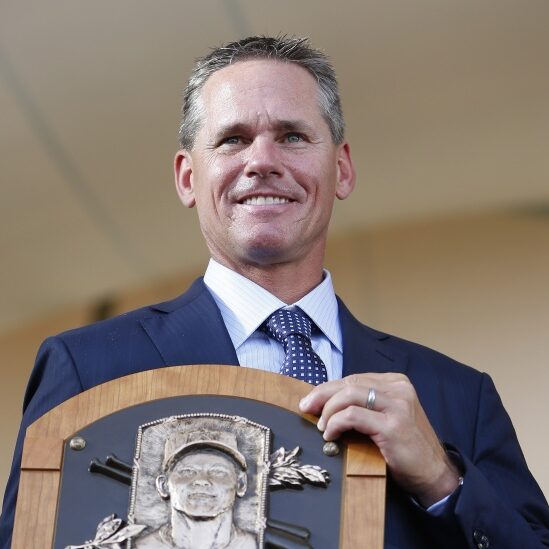
Craig Biggio
Baseball
Craig Biggio has done it all in Major League Baseball. He’s a seven-time National League All-Star with four NL Gold Glove Awards. He’s the only player in history to be an All-Star at catcher and second base, has been hit by more pitches than anyone in history and has played for only one team in his entire 19-year major league career.
Called up as a catcher midway through the 1988 season, Biggio didn’t waste any time before winning the starting job from veterans Alex Trevino and Alan Ashby. By 1989, Biggio was providing a spark in the Astros’ lineup as he hit 13 home runs while driving in 60 and stealing 21 bases, good enough to earn the Silver Slugger Award for best-hitting catcher in the National League.
1991 was Biggio’s coming out party as he wound up in the All-Star Game for the first time thanks to a .295 batting average and 19 steals. In 1992, the Astros were growing concerned with Biggio’s legs staying healthy behind the plate. That concern prompted Biggio’s move to second base where he made his home for the next several seasons.
In the ’92 season, Biggio’s stolen base total went from 19 to 38, and his hitting took off from there. Biggio, who now has 281 career home runs, hit over 20 for the first time in 1993, the first of eight times that he would reach that plateau in a season.
Defensively, Biggio had also become one of the best in the business and was rewarded with four consecutive Gold Gloves from 1994–1997. As Biggio was growing into his own at second base, the Astros were starting to gel as a team. Led by the Killer Bs—Biggio, Jeff Bagwell, Derek Bell and Sean Berry—the Astros went to the playoffs for the first time in 11 years in 1997.
It wasn’t until 2004, Biggio’s fifth trip to the postseason, that he would really come through at the dish. A combined 7-for-54 during his first four postseason series, Biggio broke out in the 2004 NLDS against the Braves by going 8-for-20 with a home run and four RBI as the Astros won a postseason series for the first time in franchise history.
In 2005, Houston, led by Biggio’s career-high 26 home runs, would win two more postseason series, culminating in their first trip to the World Series. While the World Series didn’t go the way the Astros had hoped after getting swept by the Chicago White Sox, Biggio ended a streak of playing in 2,564 regular season games without playing in the Fall Classic.
At age 40, Biggio is still going strong. He finished the 2006 season with 21 home runs and 62 RBI. He also finds himself just 70 hits away from becoming the 27th player in history to record 3,000 hits in a career. All of the others, with the exception of Pete Rose and those not yet eligible, have a plaque in Cooperstown which should already be dusting off a spot for Craig Biggio.




Arturo Gatti
Boxing
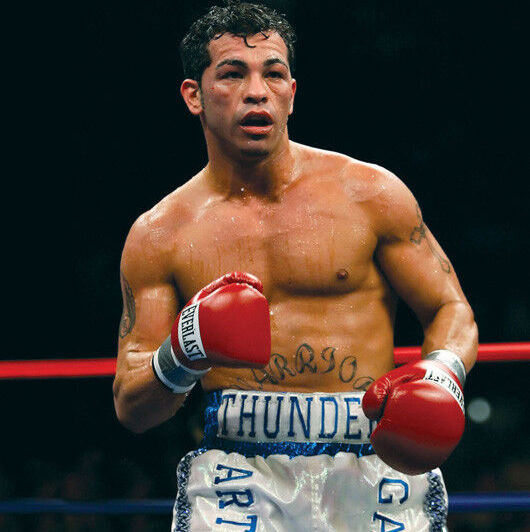
One of the most exciting fighters of all time, Arturo “Thunder” Gatti has fought his way to become one of boxing’s most recognizable names. Perhaps most well-known for his trilogy with “Irish” Mickey Ward, Gatti participated in Ring Magazine’s “Fight of the Year” three years in a row, 1996–1998.
Gatti turned pro in 1991 just after turning down a chance to compete for the Canadian National Team in the 1992 Summer Olympics in Barcelona. Gatti scored a knockout in his first professional fight as he took care of Jose Gonzalez in the third round. From there, it didn’t take Gatti long to thrust himself into the title picture.
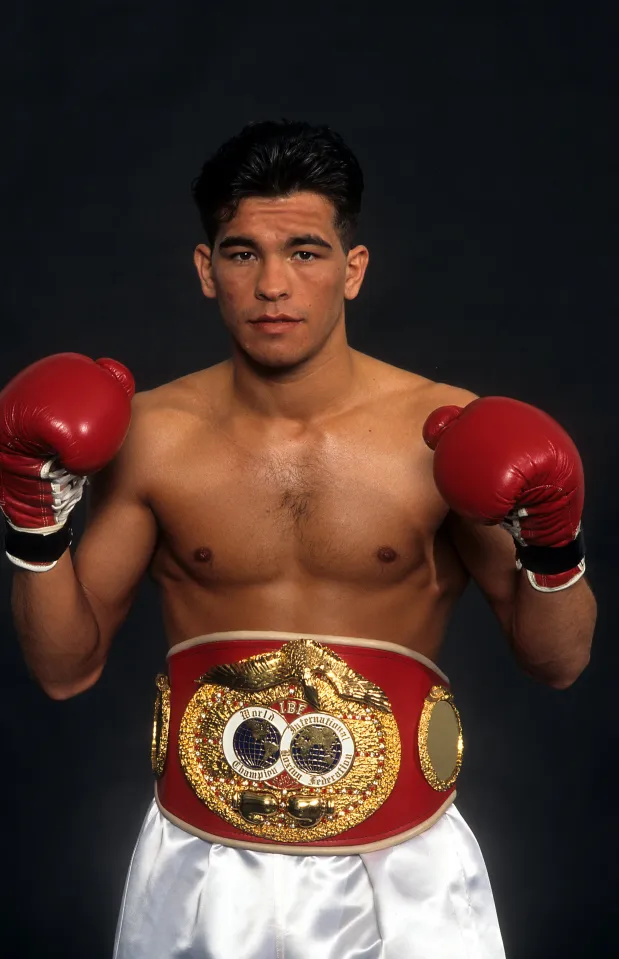
On December 15, 1995, Gatti was able to call himself a world champion for the first time as he became the IBF Jr. Lightweight Champion when he narrowly beat Tracy Harris Patterson by decision.
Gatti only defended that title once in 1996, but the fight was memorable as Gatti showed the toughness and perseverance that made him champion. After a third-round knockout that made it hard to see out of his right eye, Gatti knocked out Wilson Rodriguez in the sixth round at Madison Square Garden in the bout that would be the first of his overall five “fight of the year” honors.
The 1997 “Fight of the Year” was even tougher for Gatti to come out on top, but again Gatti showed his will to hang on to his championship. Rocked by a left uppercut in the fourth round by former world champion Gabriel Ruelas, Gatti absorbed more than 15 consecutive punches before being saved by the bell. In the fifth, he connected on a left hook to drop Ruelas and end the fight.
After relinquishing his title to move up a weight class, Gatti laid low for a few years before he took boxing’s center stage again as he began his classic trilogy with Mickey Ward. The first two fights went to decision with each man winning one, setting up the memorable third bout.
While Gatti-Ward I earned Ring Magazine’s “Fight of the Year” honors for 2001, the 2003 fight not only earned “fight of the year” honors but could have been one of the greatest fights ever. Gatti, who broke his right hand in the fourth round and fought virtually one-handed for the rest of the night recovered from a sixth-round knockdown to defeat Ward by decision.
Born April 15, 1972, in Italy, Gatti is 40-8 in his professional career with 31 knockouts


Cammi Granato
Hockey
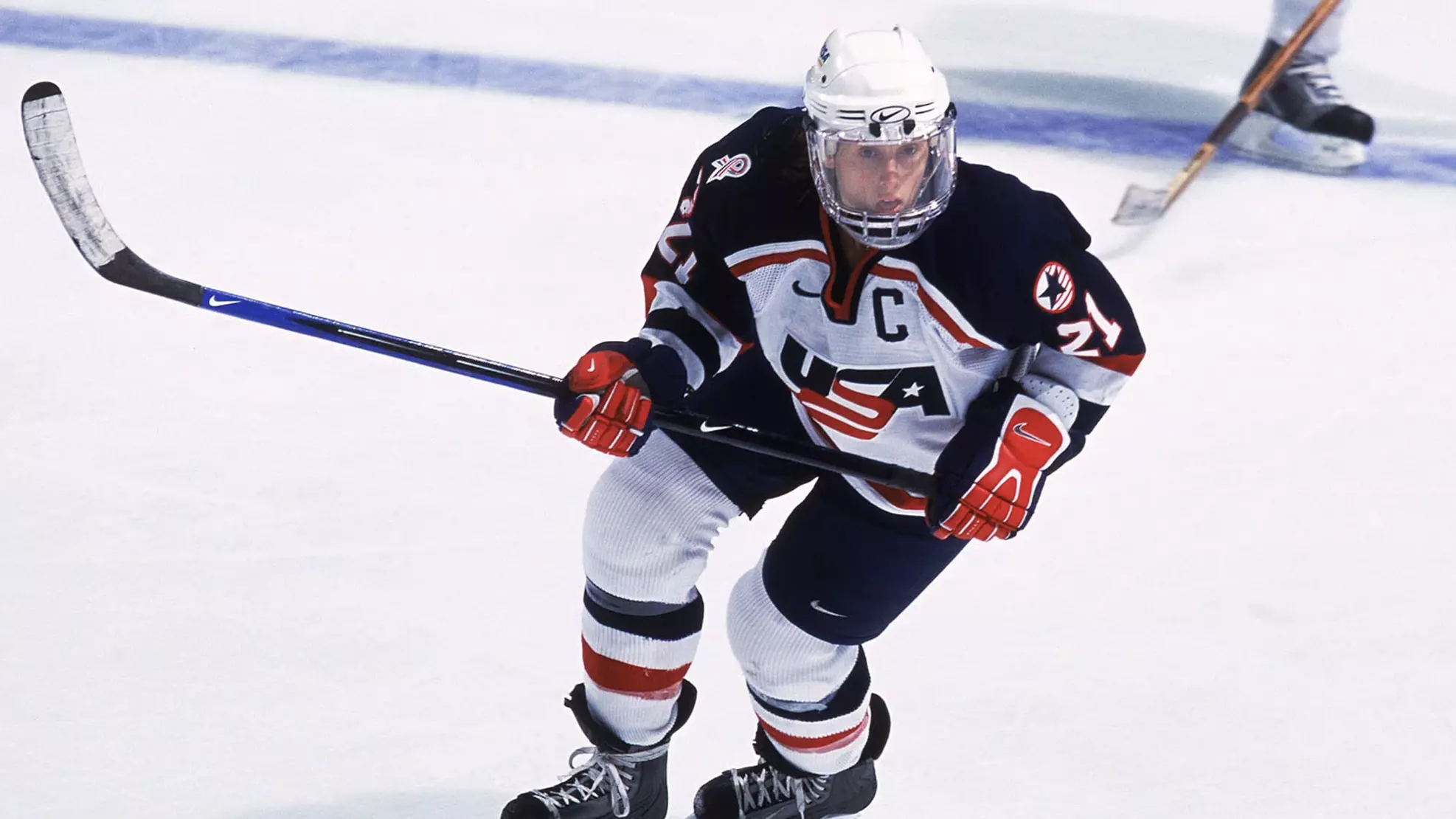
Women’s hockey has hit its stride in the last 10 years, and nobody has been more influential in that process than Cammi Granato. Granato’s star began to rise in her last three years of college at Providence where she was the Eastern College Athletic Conference Player of the Year in 1991, ’92 and ’93.
Granato grew up in Downers Grove, Illinois, where she yearned to play organized hockey in a town that had no girls’ league. Naturally, that wouldn’t stop Granato from her dream as she soon joined the Downers Grove Huskies, a boys’ team that she played on from kindergarten until her junior year of high school.
Granato’s experience and play on the boys’ team earned her a scholarship at Providence that would lead to her prominence for the Friars. Granato’s 139 goals and 256 points at Providence were school records.
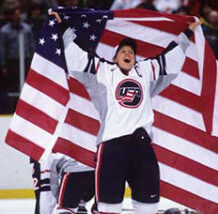
Just a few years after graduating from Providence, Granato became the face of women’s hockey as she was named the first-ever captain of the U.S. Women’s National Team. In 1998, Granato’s four Olympic goals helped the U.S. squad win the gold medal at the Winter Games in Nagano, Japan. Granato wasn’t done making headlines in Japan as she also carried the flag for the U.S. Olympic Team at the closing ceremonies.
After helping the U.S. women’s hockey team bring home the gold in ’98, Granato began making an impact off the ice. She served as radio color commentator for the Los Angeles Kings, becoming just the second female broadcaster in NHL history. In 1999, she started the Golden Dreams for Children Foundation, which was organized to provide support for children with special needs. She also started the Cammi Granato Gold Medal Hockey Clinic for Girls, a three-day hockey camp for women of all ages and levels.
Granato, a member of the Women’s National Team from 1990–2006, helped the squad win the silver medal at the 2002 Olympics in Salt Lake City. She is also the all-time leading scorer in the history of women’s hockey.
Granato’s brother, Tony, played 14 seasons in the NHL and is currently an assistant coach for the Colorado Avalanche. Granato’s husband, Ray Ferraro, played 18 seasons in the NHL and is currently a commentator for ESPN. The couple married in 2004 and both served as in-studio analysts for NBC’s hockey coverage of the 2006 Winter Olympics.

Generoso Pavese
Fencing
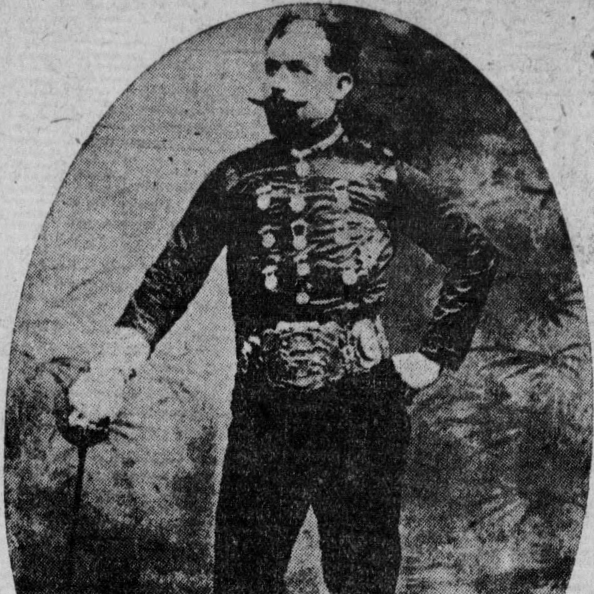
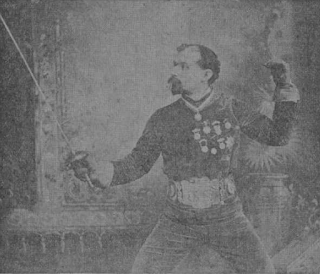
In the history of sports, perhaps there is no greater story than that of Professor Generoso Pavese, one of the legendary fencers of all time, a man who could do things with a sword that no other man in the world could do.
Pavese started his career in the late 19th century in Italy where fencing matches were still being fought to the death under European rules. While racking up the victories, Pavese became well-known throughout Europe as one of the top fencers in the world.
However, Pavese’s life really took off when he moved to the United States. Things were a little easier on the professor in North America as he no longer had to fight to the death. U.S. fencing rules prohibited that style of fighting but instead based their winners on a point system.
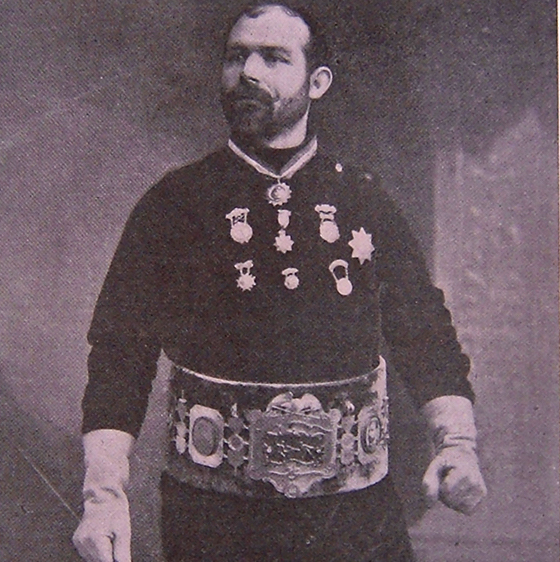
Pavese had no problems settling into the new American style of fencing. In 1895, Pavese was awarded with the Police Gazette World Championship belt, a title that he would never let go of, actively defending it for over 30 years.
Pavese took on all comers during his championship reign. One notable title defense came against his own son, Newton, only Pavese didn’t know he was fencing against his son until after the match. The professor was holding a tournament in Baltimore where he defeated 20 guys. Newton entered the tournament wearing a mask and calling himself the Masked Marvel. When the match concluded, the professor was surprised at how talented the man he faced was, at which point, the masked man revealed himself as Newton, much to the shock of the elder Pavese.
It was rumored that Pavese won over 350 bouts in his fencing career without losing once.
In the early 1900s, Pavese caught the eye of President Theodore Roosevelt, who wanted to honor Pavese at the White House. At the ceremony, President Roosevelt presented Pavese with a check. The President watched in disbelief as Pavese’s wife ripped up the check and told the President that they weren’t there for his money, they were there for a job. Pavese got a job and became the fencing instructor for the United States Navy where he spent six years teaching in Annapolis. He also taught President Roosevelt how to fence.
Pavese passed away on January 15, 1947, in Baltimore, Maryland the at age of 82.


Joe Petrali
Motorcycle Racing
In the world of motorcycle racing, one name came before all the rest. “Smokin” Joe Petrali tore up the race tracks on his Harley-Davidson in a decade of dominance from the mid-1920s to the mid-1930s.
Petrali was one of the last great Class A racing stars as he competed in board track racing, dirt track, speed records and hillclimbs. He also won a record 49 American Motorcycle Association national championship races, a mark that would not be surpassed for 55 years, until 1992, when Scott Parker won his 50th AMA national.
Petrali’s affinity for motorcycles began as a young boy, growing up in California where he would watch the Class A racers of the 1910s, such as Don Johns and Charles “Fearless” Balke. Balke wore leather pants and puttees while racing to keep his legs from burning, a look that Petrali would adopt years later.
Petrali raced for the first time at age 14 in an economy run held at the California State Fairgrounds in Sacramento. Petrali raced 176 miles on one gallon of gas to win the national economy class for 30.50-cubic-inch motorcycles.
Petrali would run endurance races for three more years, even setting the record in a tie with Archie Rife when the two putted around for three days and four nights before the race was finally called a tie.
At age 17, Petrali hit the race track at full speed, finishing second in his first speed race. Four years later, Petrali ran his first race for Harley-Davidson when he set a board track record by averaging 100.36 mph in a race he won easily in Altoona, Pennsylvania. Petrali wasn’t supposed to race for Harley-Davidson that day. An injury to Harley racer Ralph Hepburn gave Petrali a chance to enter the race.
Soon after the victory, Petrali signed with Harley-Davidson and won his first three races before setting out to dominate the sport of motorcycle racing. When his career ended, Petrali went into aviation and worked for Howard Hughes, becoming the flight engineer for the “Spruce Goose,” the world’s largest flying boat.
Petrali was born on February 22, 1904 in San Francisco, California, and died of a heart attack on November 10, 1973 in Casa Grande, Arizona, while conducting an economy run for Buick. In his later days, Petrali was famous for always carrying an AMA membership card that identified him as AMA Life Member #1.


